ProcessWhat happens after you get in touch

From first conversation to handover, in four phases

A free consultation, a written project brief, the build, then deployment and upkeep. Here's what each phase involves, what you decide and what you receive.

The four phases

What each phase is for

  1. 1

    1 · Free consultation

    We listen to the problem and ask what's been tried. You leave with a clearer picture.

  2. 2

    2 · Project brief

    The need written down: scope, order of work and the skills required.

  3. 3

    3 · Build

    Work carried out in shared tools, with network specialists where needed.

  4. 4

    4 · Deployment & upkeep

    Released, handed over and maintained so it keeps doing its job.

Phase 1

The consultation is about the problem, not the product
You decide whether to go further

Chat with us, schedule a call or send the form — then we talk through what isn't working, who it affects and what success would look like. Bring whatever you have: an old site, a spreadsheet you've outgrown, a list of complaints.

At the end you'll know how we'd approach it. Whether to continue to a brief is entirely your call.
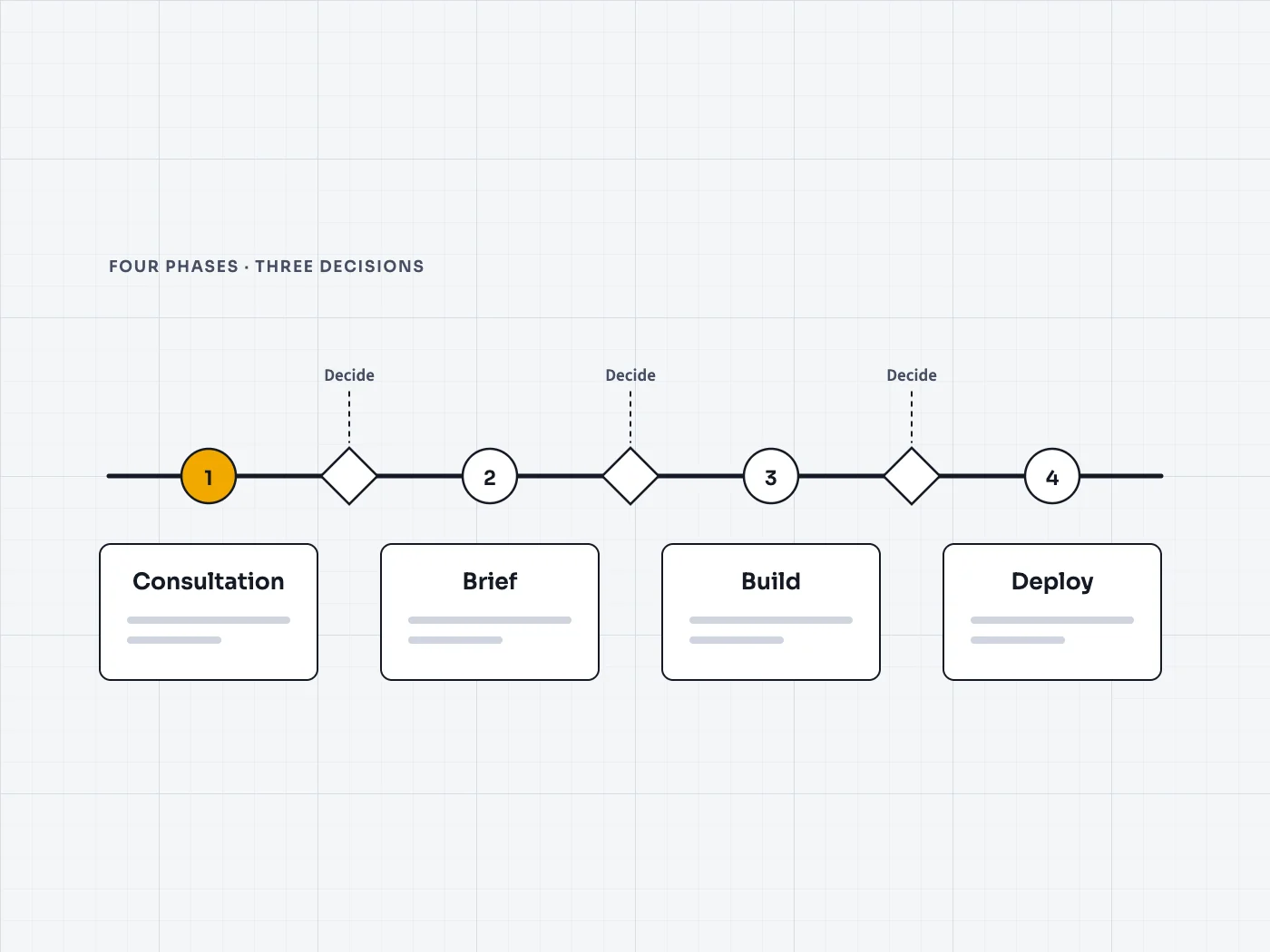
Four project phases on a rail with decision points between them

Phase 2

The brief turns a conversation into an agreement
You decide what's in and what's out

Tell us more about your project and we'll shape it into a written brief: what will be delivered, in what order, which disciplines it needs, and whether specialists from the network will be involved.

The brief is the reference for everything that follows — design reviews, testing and sign-off are all measured against it.

Phases 3 and 4

Build, deploy, and keep it working
You review as it takes shape

During the build, communication, tasks, files and progress live in shared tools you can see. Specialists from the network work inside the same system as the core team.

Deployment is followed by maintenance and updates, planned rather than improvised, so the work keeps doing its job as your organisation changes.

What you receive

Deliverables by phase

  • After the consultation

    A clear understanding of the problem and how it could be approached.

  • After the brief

    A written scope: deliverables, sequence, disciplines and any specialists involved.

  • During the build

    Access to shared task, file and progress tools, and designs or builds to review.

  • At deployment

    The finished work released into your environment, with the access it needs to run.

  • Afterwards

    An agreed arrangement for maintenance and updates.

Questions

About working together

What happens in the first consultation?

It's a conversation about what isn't working and what you'd like to change — there's no preparation required beyond being able to describe the problem.

What if I don't know what I need?

That's common, and it's what the first phase is for. Plenty of projects start as “our systems are a mess” or “the website isn't bringing anything in”. Turning that into something specific is part of the work.

Can we stop after the brief?

Yes. The brief describes what would be built and in what order. It's yours to act on, whether you continue with us, take it to someone else, or decide the project isn't worth doing right now.

How involved do I need to be during the build?

Enough to answer questions and review work at the agreed points. Progress, tasks and files stay visible in shared tools, so you can check in as often — or as little — as you like.

What happens if the scope changes mid-project?

Changes are normal. When one comes up it is described and agreed against the brief before the work happens, so the plan and the cost don't drift apart quietly.

Who is involved besides you?

That depends on the brief. If it calls for a skill outside the core team, a specialist from our freelancer network joins for that part, working in the same shared tools as everyone else.

Start with phase one

The consultation is free. Tell us about the problem and we'll take it from there.