By Creative Young SolutionsPublished 9 min read
Bringing in a freelance developer, designer or IT specialist is one of the most practical ways for a small organisation to get technology work done. It's also an arrangement Canadian tax and employment rules look at closely. Here is how the contractor–employee line is drawn and what a project agreement should settle.
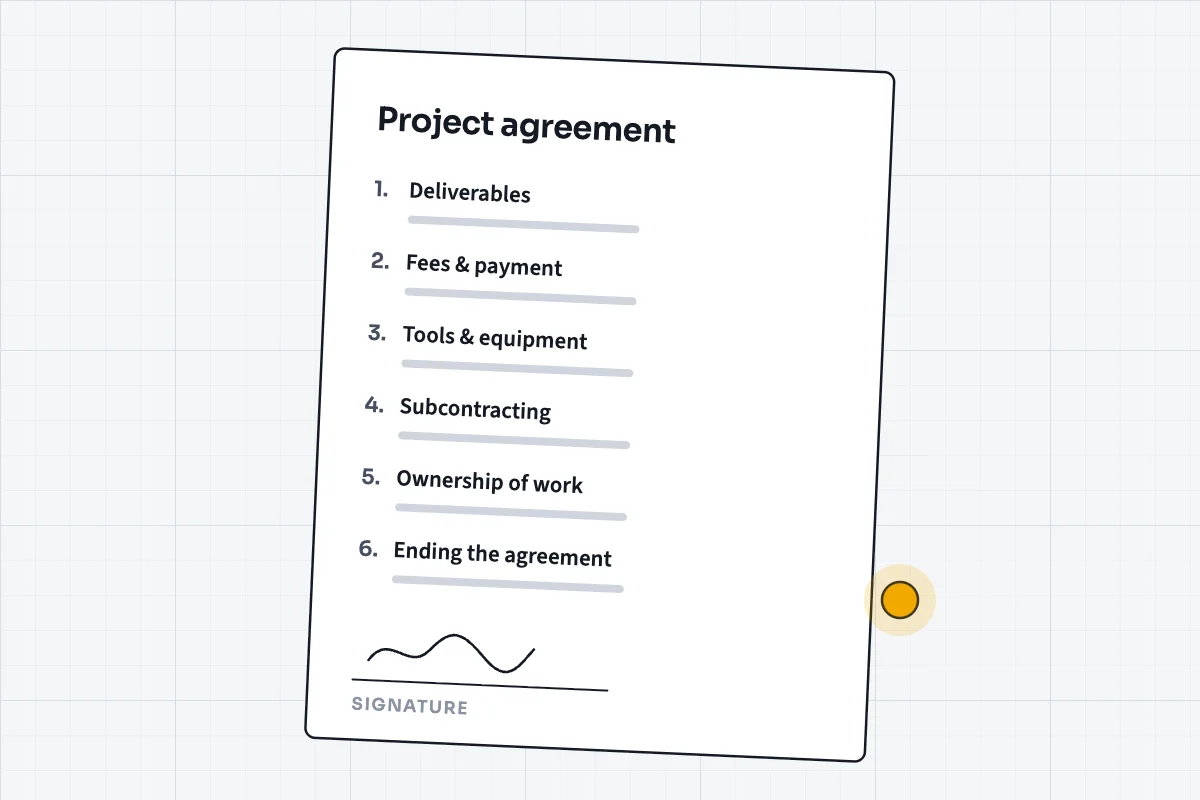
Calling someone a contractor doesn't make them one. The Canada Revenue Agency looks at the intention of both parties and then checks it against the real working relationship — control, tools, subcontracting, financial risk, investment and the chance of profit. Write the agreement to match how the work will actually be done.
Why the label matters
An employee and an independent contractor are treated very differently. For an employee, the payer deducts income tax, Canada Pension Plan contributions and Employment Insurance premiums, and employment standards such as minimum wage, overtime, vacation pay and notice of termination apply. A self-employed contractor looks after their own taxes and contributions, invoices for their services and runs their own business.
If a relationship is labelled as contracting but works like employment, the consequences can land on both sides: assessments for unremitted deductions for the payer, and lost protections for the worker. That's why it's worth understanding the test before you draft anything.
This guide is general information to help you ask the right questions. It isn't legal or tax advice; for a specific arrangement, speak to an accountant or employment lawyer.
How the CRA decides: intention, then reality
Outside Quebec, the Canada Revenue Agency uses a two-step approach, described in its guide RC4110, Employee or Self-Employed? First, it asks what the worker and the payer intended when they entered into the arrangement: a contract of service (employment) or a contract for services (a business relationship). A written agreement is useful evidence of that intention.Sources for this passage: Canada Revenue Agency — RC4110, Employee or Self-Employed?
Second — and this is the step that catches people out — it checks whether the actual working relationship is consistent with that intention. The agency looks at a set of factors, and no single one decides the outcome on its own:
- Control — whether the payer has the right to direct how and what work is done, whether or not they exercise it
- Tools and equipment — whether the worker provides significant tools and bears the cost of maintaining and insuring them
- Subcontracting work or hiring assistants — whether the worker can hand work to others or hire help without the payer's approval
- Financial risk — whether the worker carries unreimbursed expenses and fixed ongoing costs
- Responsibility for investment and management — whether the worker invests capital and makes business decisions
- Opportunity for profit — whether the worker can make a profit or incur a loss, beyond simple variation in income
What that looks like on a technology project
A freelance developer who quotes for a defined deliverable, works on their own equipment and software licences, sets their own hours, decides how to build what's been agreed, can bring in a colleague to help, and bears the cost if the job takes longer than expected, looks like a business providing a service.
A “freelancer” who works set hours on the payer's laptop, attends the team's daily meetings as a matter of obligation, takes direction on how every task is done, cannot delegate, and is paid by the hour indefinitely regardless of results starts to look like an employee — whatever the contract says.
Most real arrangements sit somewhere in between, which is exactly why the relationship should be designed, not left to drift. Scope the work as a project with deliverables, let the specialist decide how to achieve them, and keep coordination to what the project genuinely needs.
If you're still unsure, ask for a ruling
When the status of a worker is genuinely unclear, either party can ask the CRA to decide. The request is made with Form CPT1, Request for a CPP/EI Ruling – Employee or Self-Employed?Sources for this passage: Canada Revenue Agency — Form CPT1
There is a deadline: a payer or worker can ask for a ruling by 29 June of the year after the year the question relates to. It is better to raise the question early than to argue it after the fact.Sources for this passage: Canada Revenue Agency — When to ask for a ruling
Employment standards: the Ontario angle
Tax status is one test; employment standards are another. In Ontario, the Employment Standards Act, 2000 protects employees, and the province's guide to the Act states plainly that employers are prohibited from misclassifying employees as independent contractors, interns, volunteers or any other type of worker not covered by the Act. Whether someone is covered depends on the substance of the relationship, not the label.Sources for this passage: Government of Ontario — Your guide to the Employment Standards Act
If your specialists work in another province or in the United States, different rules apply. For cross-border work in particular, take professional advice before signing anything.
Taxes the contractor handles
A self-employed contractor reports business income, pays their own tax and CPP contributions, and may need to register for GST/HST. Under the federal rules, most businesses must register once their taxable supplies exceed the small-supplier threshold of $30,000 over four consecutive calendar quarters — or immediately if they exceed it in a single quarter. If your contractor is registered, expect GST/HST on their invoices.Sources for this passage: Canada Revenue Agency — When to register for and start charging GST/HST
As the client, your job is simpler: pay invoices for services as agreed, keep the records, and avoid arrangements that make the relationship look like employment.
Who owns the work?
This is the clause most small organisations forget, and it matters enormously for software and design. Under Canada's Copyright Act, the author of a work is generally its first owner. Work made by an employee in the course of employment usually belongs to the employer — but a contractor is not an employee, so by default they may own the copyright in the code, designs or content they create for you.
The fix is straightforward: include a written assignment of copyright (or a clear licence, if that's what you both intend) in the agreement. The Act requires an assignment to be in writing and signed by the owner. It's also worth addressing moral rights — the author's right to be associated with the work and to its integrity — which can be waived but not assigned.Sources for this passage: Justice Laws Website — Copyright Act (R.S.C., 1985, c. C-42)
What a project agreement should settle
A good agreement protects both sides and makes the independent nature of the relationship visible. At a minimum it should cover:
- The deliverables, described specifically enough to recognise when they're done
- Timelines and milestones, and what happens if they move
- Fees, invoicing and payment terms, including any deposit
- Who provides tools, accounts, licences and equipment
- Whether the contractor may subcontract or bring in assistants
- Ownership of the work: assignment of copyright and treatment of moral rights
- Confidentiality and handling of any personal information
- Access to your systems, and removal of access at the end
- How changes to the scope are requested, priced and approved
- How either side can end the agreement
Making collaboration work in practice
Getting the legal shape right is only half the job. Distributed projects succeed when the work itself is organised: one place for communication, a shared task board, a single location for files and specifications, time and progress tracking against the plan, version control for code and documents, and notifications that tell the right people when something changes.
Those tools don't make someone an employee. They make a project with several independent contributors behave like one project instead of several. That's the model behind our freelancer network: independent specialists, properly scoped work, and shared tools that keep everyone — including the client — on the same page.